
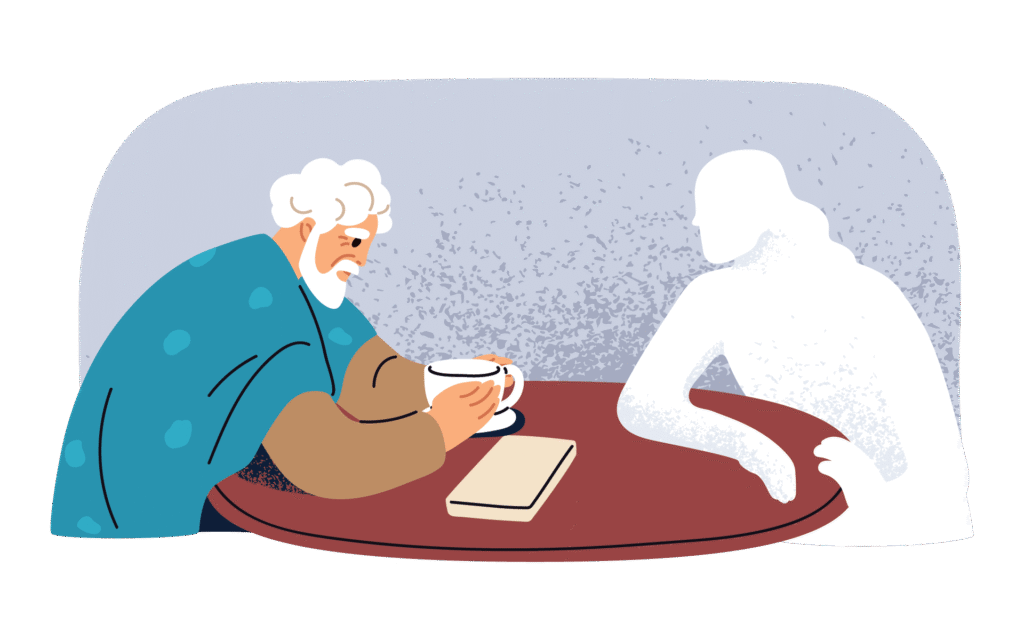
Grief is a natural response to loss. Although many people associate grief with the death of a loved one, grief can follow many types of significant changes and losses.
A breakup, divorce, job loss, serious illness, separation, or major change in life circumstances can all lead to grief.
Grief can affect emotions, thoughts, physical health, relationships, and everyday routines. Understanding what grief is can make the experience feel less confusing and help people recognize when they may benefit from professional support.
“Grief has no timetable. Healing happens at a pace that belongs to you.”
What Is Grief?
Grief is the emotional and psychological response to losing something or someone important.
It may involve a mixture of emotions rather than one single feeling.
You may feel:
- Sad
- Angry
- Lonely
- Confused
- Guilty
- Numb
- Anxious
- Exhausted
- Overwhelmed
Sometimes, different emotions can appear within the same day.
What Are the Stages of Grief?
You may have heard of the five stages of grief:
- Denial
- Anger
- Bargaining
- Depression
- Acceptance
These stages are commonly associated with the Kübler-Ross model.
However, it is important to understand that grief does not necessarily happen in this exact order.
A person may experience some emotions and not others. They may move back and forth between feelings or experience several emotions at the same time.
Grief is individual rather than a checklist that everyone must complete.
1. Denial
Denial can involve difficulty accepting what has happened.
A person may think:
“This cannot really be happening.”
Denial can sometimes act as an emotional buffer, giving a person time to process overwhelming information.
2. Anger
Anger can emerge after a loss.
A person may feel angry at:
- The situation
- Other people
- Themselves
- Circumstances
- Life in general
Anger does not mean someone is grieving incorrectly.
3. Bargaining
Some people may find themselves thinking about “what if” questions.
For example:
- “What if I had done something differently?”
- “What if things had happened another way?”
- “What if I had noticed something earlier?”
These thoughts can be part of trying to make sense of an experience that feels difficult to accept.
4. Depression or Deep Sadness
A significant loss can bring deep sadness.
Someone may experience:
- Low energy
- Frequent crying
- Loss of motivation
- Loneliness
- Changes in sleep
- Difficulty concentrating
It is important to distinguish normal grief-related sadness from a mental health condition. A professional can help assess persistent or severe symptoms.
5. Acceptance
Acceptance does not mean that the loss no longer hurts.
Instead, it may involve gradually recognizing the reality of what happened and learning how to move forward.
Acceptance can coexist with sadness.
How Can You Cope With Grief?
Allow yourself to feel
Trying to suppress every emotion can make the grieving process more difficult. Give yourself permission to experience emotions without judging them.
Maintain basic routines
Try to maintain regular sleep, meals, movement, and daily activities where possible.
Stay connected
Talking with trusted people can reduce feelings of isolation.
Remember in your own way
Some people find comfort in photographs, journaling, meaningful objects, memories, rituals, or talking about the person they lost.
Be patient with yourself
Grief rarely follows a straight line.
A difficult day does not mean that your healing has failed.
How Can Counselling Help?
Grief counselling can provide a supportive environment where you can talk openly about your loss.
A counsellor may help you:
- Understand your emotions
- Process painful memories
- Manage guilt and anger
- Cope with loneliness
- Adjust to changes
- Develop healthy coping strategies
- Rebuild your daily life
Online counselling can be an accessible option for people who prefer receiving support from home.
When Should You Seek Professional Help?
Professional support may be useful when grief becomes overwhelming or significantly interferes with everyday functioning.
You don’t need to wait until things become unbearable before asking for help.
Seeking counselling is not a sign that you are unable to cope. It can simply mean that you deserve support while going through something difficult.
There is no universal timeline for grief.
You may have good days and difficult days. You may laugh one moment and cry the next. Both experiences can exist together.
Grief is not about forgetting. It is about adapting to life after a meaningful loss.
“Healing doesn’t erase the love or the memories. It helps you carry them differently.”
Quick and easy access to my account every time. The login process is seamless at ggg777login, which is exactly what I need.
Best platform I have used in the Philippines so far. The variety of games is impressive and the payouts are fair. Give phbcgame a try, you won’t regret it.
I’ve tried a few sites lately but this one is surprisingly smooth. The games load fast and the interface is very user friendly. Definitely recommend checking out pkj2game for a great time.
Solid platform with a huge variety of games. I appreciate the transparency and the quick deposit options. Five stars from me! bdvb88
Really enjoying the current promotions. The community here is friendly and the games are addictive. See you all at vnfu88!
The VIP perks here are actually worth it. I feel like a valued player every time I log in. Join the club at 8kbetvvip.
I’ve been playing here for a few weeks now and the payout speed is impressive. Definitely one of the most reliable platforms I’ve found lately. Check out brzzwinvip for a great experience.
The app is incredibly responsive and doesn’t lag at all. It’s perfect for playing on the go. Just downloaded 369jlapp and it is awesome.
Super intuitive design and the loading times are barely there. It makes the whole experience so much more enjoyable. vnzoo88 is killing it right now.
Found this site last week and I am loving the variety of games. The bonuses are actually fair and easy to claim. Check out starwin88login if you want a legit spot.
Very impressed with the customer support and the quick loading times. Definitely my new go-to spot at 16jililogin.
Great customer support and a very friendly community feel. It makes the whole gaming experience much more enjoyable. Love using indwin7login.
I’ve tried a few sites lately but this one really stands out. The interface is smooth and the payouts are fast. Definitely checking out br2nn more often.
Quick login and even quicker withdrawals. It is hard to find a platform this reliable these days. Give 55llbetlogin a shot.
The jackpot hits here feel way more frequent than other places I have tried. Love the variety of slot themes they have available. Highly recommend supermposlot for anyone craving big wins.
Perfect for sports fans! The live updates are spot on and the betting options are huge. vn789cup is where it’s at.
I love how I can place my bets on the go. The app is stable and the odds are very competitive compared to others. 77888betapp is a winner.
Feeling lucky today and this site made it even better. The bonus offers are actually generous compared to others. Shoutout to phsvip777 for the win.
I’ve tried a few platforms, but the interface here is so smooth. Really enjoying my time on jili00game, definitely my new favorite spot!